Table of contents
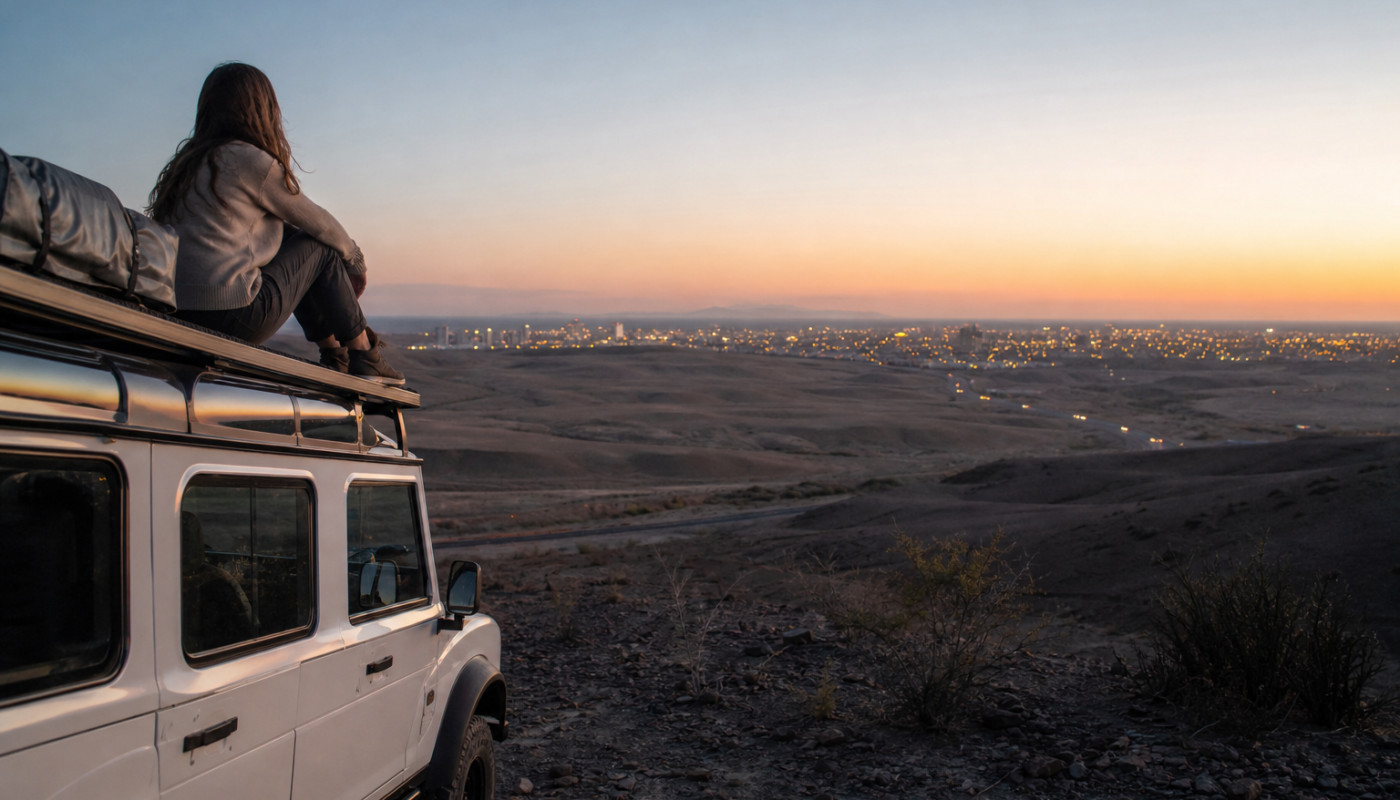
Namibia has quietly become one of Africa’s most compelling self-drive destinations, helped by a long-running reputation for political stability, a road network that reaches deep into the desert, and landscapes so extreme they can feel unreal. Yet the real surprise often comes between the postcard stops, when a morning in silent dunes gives way, by nightfall, to a buzzing waterfront or a skyline of cranes. For travellers chasing contrasts rather than checklists, a Namibia road trip is less a straight line and more a series of jolts, each one resetting expectations.
Where dunes swallow roads, and time
How empty can a place feel? In Namibia, the answer arrives early, sometimes within the first hour outside Windhoek, when the city’s last roundabout slips behind you and the horizon starts doing its slow, hypnotic work. The country is among the most sparsely populated on Earth, at roughly three people per square kilometre according to World Bank estimates, and that statistic is not academic when you are driving for long stretches with no villages, no billboards, and only the occasional fuel station breaking the spell.
The Namib Desert, often described as the world’s oldest desert, delivers the classic images, especially around Sossusvlei and Deadvlei, where dunes can rise well over 300 metres, and the light turns sand into a living gradient. Yet the surprise is how roadworthy the wilderness remains, Namibia has a large network of gravel roads, and while conditions vary with season and maintenance, they link areas that would feel unreachable elsewhere. Self-drivers quickly learn the local rhythm, leave early to avoid heat and glare, keep speeds conservative on loose surfaces, and treat distances as time, not kilometres, because a 250-kilometre gravel stretch can take far longer than expected.
Even in the desert heartland, the contrasts begin to stack up. One moment you are climbing a dune before sunrise, the next you are sipping coffee at a lodge with Wi‑Fi and a bakery counter, a small reminder that Namibia’s tourism economy has matured around the needs of independent travellers. Data from Namibia’s tourism authorities and industry reporting has shown a strong rebound in arrivals since the pandemic slump, and while figures fluctuate year to year, the direction has been clear: demand is back, and road trips remain a defining way to experience the country’s scale. For planning that goes beyond the obvious highlights, and to compare routes, seasons, and driving times, you can look at more info while shaping an itinerary that matches your pace.
Then comes the deeper, quieter contrast, the sense that you are moving through geologic time. Dead camelthorn trees stand bleached against white clay, some estimated to be centuries old, and the silence can feel physical, especially when wind drops and footsteps are the only sound. It is not merely scenic, it is disorienting in the best way, and it sets up the shock when Namibia’s urban edges reappear.
Skeleton Coast: beauty with sharp edges
Don’t let the word “coast” mislead you. The Skeleton Coast is not a gentle, beach-holiday shoreline, it is a cold, foggy, wreck-strewn margin where the Atlantic meets desert and wins the first round. The Benguela Current drags icy water northward along the coast, cooling air and creating dense fog that can roll in without warning, and travellers feel that shift viscerally after days in dry heat. It is one of the road trip’s cleanest contrasts, sunburn becomes a memory, you reach for a jacket, and your windscreen turns milky at midday.
Walvis Bay and Swakopmund are the usual gateways, and their atmosphere can feel almost European, with promenades, cafés, and a tourism scene built around sea air and adrenaline. Yet step beyond town limits and the environment hardens, dunes spill toward the ocean, salt pans gleam, and shipwreck stories cling to the landscape. The coastline’s notoriety is not romantic invention, it reflects real maritime danger, driven by fog, currents, and shifting sandbars, and the result is a place that photographs like a dream while behaving like a warning sign.
That edge is also ecological. The cold ocean supports rich marine life, which is why day trips often focus on dolphins, seals, and birdlife, and why the lagoon systems around Walvis Bay have long been recognized for their importance to migratory species. Inland, desert-adapted wildlife pushes against the boundaries of what many travellers think possible, especially when you start hearing about elephants and lions surviving in arid regions, moving along ephemeral rivers that only run after rain. Namibia’s conservancy model, frequently cited in conservation circles, has helped communities benefit from wildlife and tourism, and while challenges remain, including human-wildlife conflict and drought stress, the approach is part of what makes the country’s wild spaces feel lived-in rather than fenced-off.
For drivers, the Skeleton Coast also forces practical choices, because weather and road conditions dictate tempo. Fog reduces visibility, winds can push sand across roads, and distances between services require planning, particularly outside the main town corridor. It is an environment that rewards humility, keep the fuel tank conservative, download maps, and do not treat the Atlantic edge like a casual detour. The payoff, however, is an experience that feels cinematic, the sudden appearance of a seal colony on a grey beach, a rainbow halo in the mist, or the sight of dunes collapsing into surf.
Etosha nights: headlights and heartbeat
Can a game drive change after dark? In Etosha, the answer is yes, and the contrast is immediate. By day, the park’s salt pan reads like a mirage, a vast white expanse visible from kilometres away, and wildlife sightings can feel almost staged at waterholes, where zebra, springbok, wildebeest, and oryx cycle through in loose patterns. At night, particularly at the floodlit waterholes in some rest camps, the atmosphere shifts, and the road trip stops being about kilometres and starts being about waiting, listening, and letting the bush decide.
Etosha is one of Africa’s flagship protected areas, and its name recognition sometimes makes travellers assume it will feel crowded or choreographed. In peak periods it can be busy, yet the scale still dominates, the park spans more than 22,000 square kilometres, and even on popular loops there are long moments when your car is alone, the radio off, and the only motion is heat haze. This is where Namibia’s road trip identity locks in, you are not being transported, you are doing the transporting, scanning the verge for movement, managing distance to the next fuel point, and learning how quickly light falls in the late afternoon.
The unexpected contrast here is emotional. You might spend a morning watching giraffes move like slow machinery against mopane woodland, and then, a few hours later, sit at a camp waterhole while hyenas materialize out of darkness. In those moments the park feels less like a destination and more like a boundary between safety and wildness, marked by a simple fence line and a set of camp rules. Etosha’s infrastructure makes self-drive feasible for many visitors, but it does not remove the sense of risk, especially when you hear lions calling beyond the lights, a sound that travels through the chest before it reaches the ears.
There is also a quieter contrast, the difference between abundance and absence. Drought years can concentrate animals at water sources, intensifying sightings, while wet seasons can disperse wildlife, rewarding patience rather than speed. Namibia is highly vulnerable to climate variability, and travellers increasingly feel that in real time, dustier landscapes, hotter days, and the occasional dramatic thunderstorm that changes road conditions fast. A road trip through Etosha is, in that sense, a small lesson in how quickly nature rewrites plans, and why building slack time into an itinerary is not indulgence, it is strategy.
Etosha also pushes drivers to think about safety in practical ways, avoid driving at night outside permitted zones, respect speed limits, and treat animals as unpredictable rather than decorative. The park’s magic is not only in close sightings, it is in the long, suspenseful stretches where nothing happens, until suddenly it does.
Windhoek after wilderness: a different rush
After days of sand, fog, and bush, can a city feel loud? Windhoek often does, not because it is a megacity, but because your senses have been recalibrated by open space. Namibia’s capital has a population in the hundreds of thousands, and it concentrates the country’s administrative, commercial, and cultural life into a relatively compact footprint. The road trip contrast lands in small details, traffic lights, supermarket aisles, espresso machines, and the simple fact that you can choose dinner without checking the fuel gauge first.
Windhoek’s character is shaped by layers of history and modern migration, and travellers see that mix in architecture, languages, and neighbourhood rhythms. It can serve as a practical hinge in an itinerary, a place to reset, service a vehicle, replace tyres if gravel has taken its toll, and reorganize luggage that has been living in the back seat for a week. It is also where the realities of cost come into focus. Namibia is not a budget destination in the way some travellers expect, fuel, vehicle hire, and accommodation can add up quickly, and prices often rise in high season, particularly around school holidays and peak wildlife months.
Yet the city can also be the place where a journey becomes coherent. In the wilderness, you collect impressions, the burnished curve of a dune ridge, the smell of salt air, the stare of a lion in afternoon light. In Windhoek, with a stable connection and a table to spread maps on, those impressions start to form a narrative, what you missed, what you rushed, and what you would do differently next time. The contrast is not just between nature and urban life, it is between movement and reflection, and many road-trippers realise, too late, that the capital deserves more than a single overnight.
There is another, less discussed contrast: Namibia’s modern ambitions. Construction, retail expansion, and a young population seeking opportunity all sit alongside the country’s dependence on climate-sensitive sectors and on tourism’s ebb and flow. For visitors, that means being mindful, spend locally when possible, respect water scarcity, and recognize that the landscapes that look endless are not invulnerable. Windhoek, in that sense, is not an interruption to the road trip, it is a reminder that the road runs through a living country, not just a scenery reel.
Plan the return, not just the loop
Book vehicles early in peak months, and budget realistically for fuel and gravel-road wear, especially if you want a higher-clearance model. Build in rest days, and keep room for weather delays on the coast or in the north. Check whether any regional or seasonal travel offers apply, then reserve key lodges well ahead.
Similar articles